What is spinal decompression? How it works, who it helps, and how it compares
Dealing with disc pain or sciatica?
Book a first visit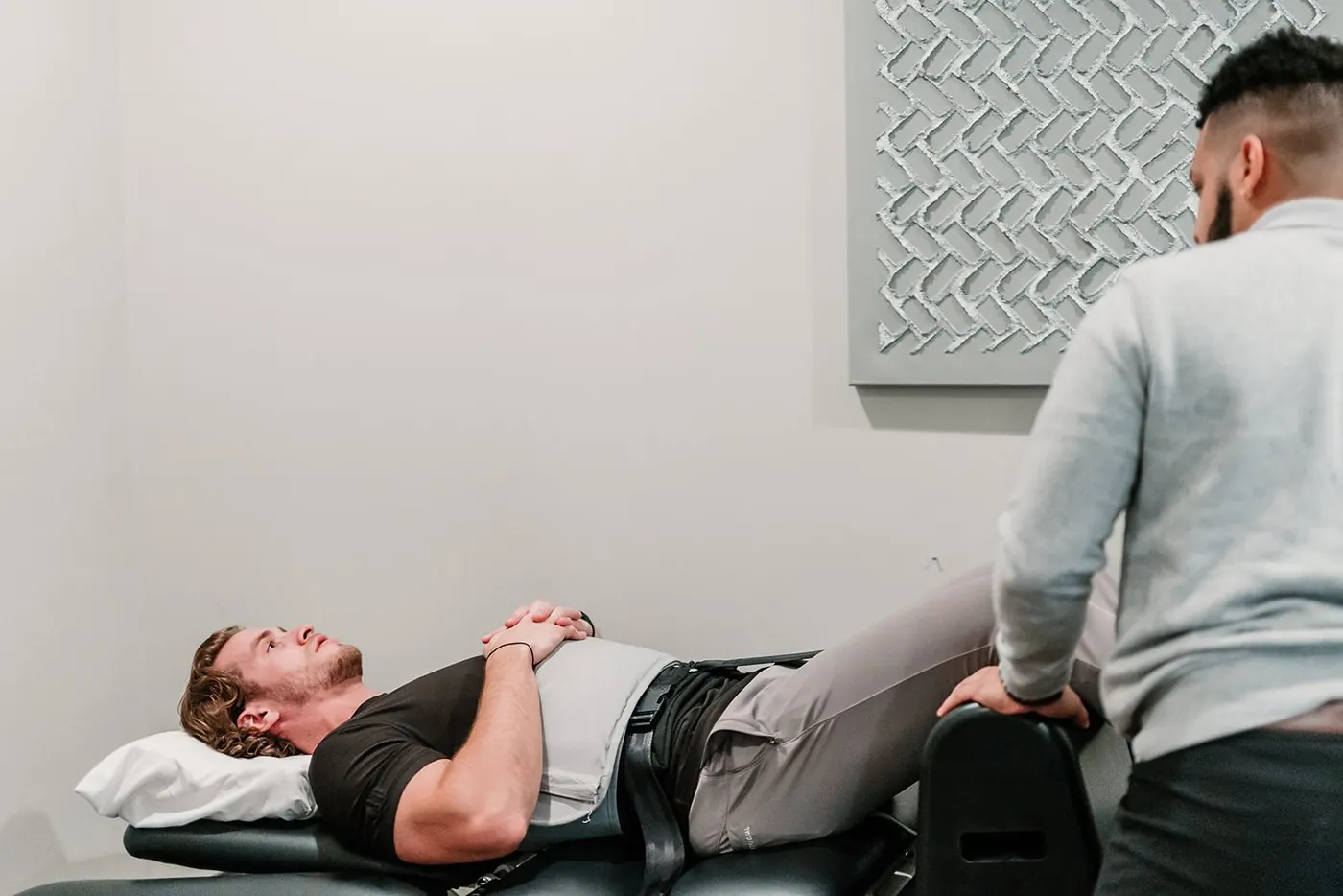
If you’ve had back pain that won’t settle, or pain that shoots down a leg, you’ve probably heard the words “herniated disc” or “sciatica.” Spinal decompression is one of the non-surgical options we use most for both. Here’s what it is, who it helps, and how it compares to the other things people try.
Your discs, in one paragraph
Between the bones of your spine are discs: firm, spongy cushions that absorb shock and let you bend and twist. Over years of sitting, lifting and living, discs can lose height and water, bulge, or herniate. When a disc presses on a nearby nerve, you can feel pain, numbness or tingling, sometimes far from the spine itself, like down a leg or into an arm.
What spinal decompression is
Spinal decompression is a gentle, computer-controlled stretch of the spine on a specialized table. You lie comfortably, a harness positions you, and the table slowly lengthens and relaxes the spine in cycles.
The goal is to take pressure off the disc and the nerves around it. The gentle stretch is thought to lower the pressure inside the disc, which may help fluid and nutrients move back in and give an irritated nerve some room.
Who it helps
We use decompression most often for:
- Bulging or herniated discs in the low back or neck
- Sciatica, or pain, tingling or numbness down a leg or arm
- Disc degeneration and the stiffness that comes with it
- Some cases of spinal stenosis
- Back pain that’s worse sitting or bending
Your doctor decides whether it fits after your exam. It’s often combined with gentle adjustments, soft-tissue work and core exercises, so the disc is protected once it settles.
What a session feels like
At CREW a session lasts about 22 to 25 minutes. You lie on your back or front, fully clothed. You’ll feel a slow, gentle pull and release. Most people find it relaxing, and some fall asleep.
Plans vary. Some people need a few weeks; others need a few months. Your doctor gives you a plan with a clear number of sessions after your exam, and we re-measure as you go.
Spinal decompression vs traction
Traditional traction pulls the spine with a steady force. It can help, but muscles often tighten against a steady pull. Decompression tables pull and release in slow cycles and adjust as you respond, which is designed to keep the muscles relaxed so the stretch reaches the disc.
Spinal decompression vs an inversion table
Inversion tables hang you upside down or at a steep angle. Some people find relief, but you can’t control the force, it can’t target one level of the spine, and it isn’t a good idea for people with high blood pressure, glaucoma or heart conditions. Decompression is controlled, targeted and done lying flat.
Spinal decompression vs surgery
Most disc problems improve without surgery. Decompression is one of several conservative options worth trying first for many people.
Surgery is the right call in some cases, and decompression is not a way around it when you need it. If your exam shows signs of significant nerve damage, we refer you to a spine specialist right away.
Who shouldn’t have decompression
Decompression isn’t right for everyone. We won’t use it if you’re pregnant, or if you have a recent spinal fracture, spinal hardware from surgery, advanced osteoporosis, a tumor or infection in the spine, or certain other conditions. Your doctor reviews your history and imaging before recommending it.
Common questions
Does decompression hurt?
It shouldn’t. You’ll feel a gentle stretch. Tell your doctor if anything feels wrong and the table adjusts.
How many sessions will I need?
It depends on your disc and your symptoms. Your doctor will give you a number after your exam.
Can I keep exercising?
Usually, with some changes during a flare. Your doctor will tell you what to keep, what to pause and what to add.
Find out what’s going on.
Your first visit includes a full exam, your scans, and a doctor who walks you through what they show and what to do next.
General information from the doctors at CREW Chiropractic, not medical advice for your situation. If something here sounds like you, book a visit or talk with your physician. For a medical emergency, call 911. How we write and review these articles.