SoftWave therapy for chronic pain: what it is and who it helps
Wondering whether SoftWave could help your injury?
Book a first visit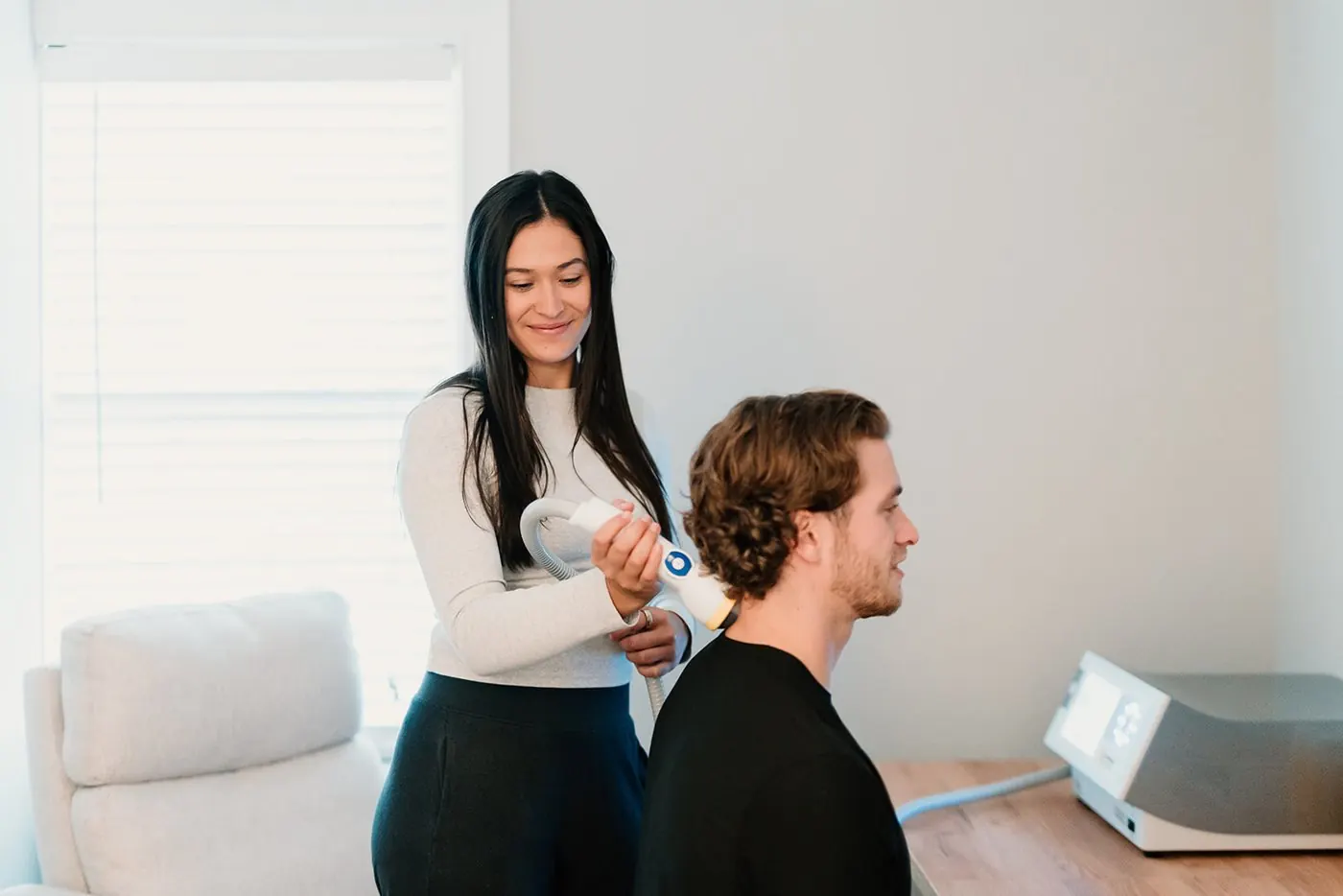
If you’re tired of managing pain with medication, injections or endless stretching, you’ve probably come across SoftWave. Here’s a plain explanation of what it is, what it helps, how it compares with other shockwave devices, and what it costs.
What SoftWave is
SoftWave is an FDA-cleared device that sends acoustic waves deep into injured tissue. The waves improve blood flow and help switch on the body’s own repair process. The aim is to help the tissue heal, not just to quiet the pain.
What it helps
We use SoftWave most for soft-tissue pain that has hung around for months:
- Plantar fasciitis and heel pain
- Achilles tendon pain
- Tennis and golfer’s elbow
- Rotator cuff and shoulder pain
- Knee pain, including arthritis
- Hip pain
- Low back and neck pain
- Old injuries that never fully healed
SoftWave vs shockwave: what’s the difference?
“Shockwave therapy” covers a few different kinds of device, and they’re not the same.
- Radial devices push a pressure wave out from the skin’s surface. The energy weakens quickly as it goes deeper, so they’re best for shallow problems.
- Focused devices concentrate energy into a small point. They reach deep but treat a small area at a time.
- SoftWave’s applicator spreads true shockwave energy across a wider and deeper area, which lets us treat a whole region, like the length of a tendon, in one pass.
That’s why we chose it. It treats the whole problem area in a short session.
One more name that confuses people: Sofwave, without the T, is a cosmetic skin-tightening treatment. It has nothing to do with SoftWave.
What a session is like
Gel goes on, and the applicator moves over the area. You’ll feel a firm tapping, which can be uncomfortable over the sorest spots, and we adjust the intensity to what you can tolerate. Ten to fifteen minutes and you walk out. There’s no downtime, though we suggest skipping high-impact training for a day or two afterward.
How many sessions you’ll need
Most plans run six to eight sessions. Many people notice a difference in the first one or two, though results vary from person to person. Your doctor will tell you what to expect for your injury.
What it costs
The cost depends on the area being treated and how many sessions your plan needs. We start with a short discovery visit to check SoftWave is right for your injury, and we give you the full cost of your plan before you start. Ask the front desk about payment options.
Is it for you?
SoftWave is worth a conversation if:
- You’d like to try a non-surgical option first
- You’ve carried pain for longer than you’d like to admit
- You’re an athlete working back from an injury
- Rest, stretching or medication only helped for a while
It isn’t right for everyone. Your doctor will check your history before recommending it.
Common questions
Are there side effects?
Usually none. Some people have mild redness or soreness for a day or two.
Do I need to be a chiropractic patient?
No. SoftWave can be booked on its own. Start with a short discovery visit.
Can I keep training?
In most cases, yes. We’ll tell you if anything should pause while the tissue heals.
Who shouldn’t have SoftWave?
We avoid it over a pregnancy, over an area with a tumor or open wound, and for some people on blood thinners or with a pacemaker. Your doctor reviews your history first.
Find out what’s going on.
Your first visit includes a full exam, your scans, and a doctor who walks you through what they show and what to do next.
General information from the doctors at CREW Chiropractic, not medical advice for your situation. If something here sounds like you, book a visit or talk with your physician. For a medical emergency, call 911. How we write and review these articles.