SoftWave therapy for back pain: what it does and who it’s for
Back pain that rest and stretching haven’t fixed?
Book a first visit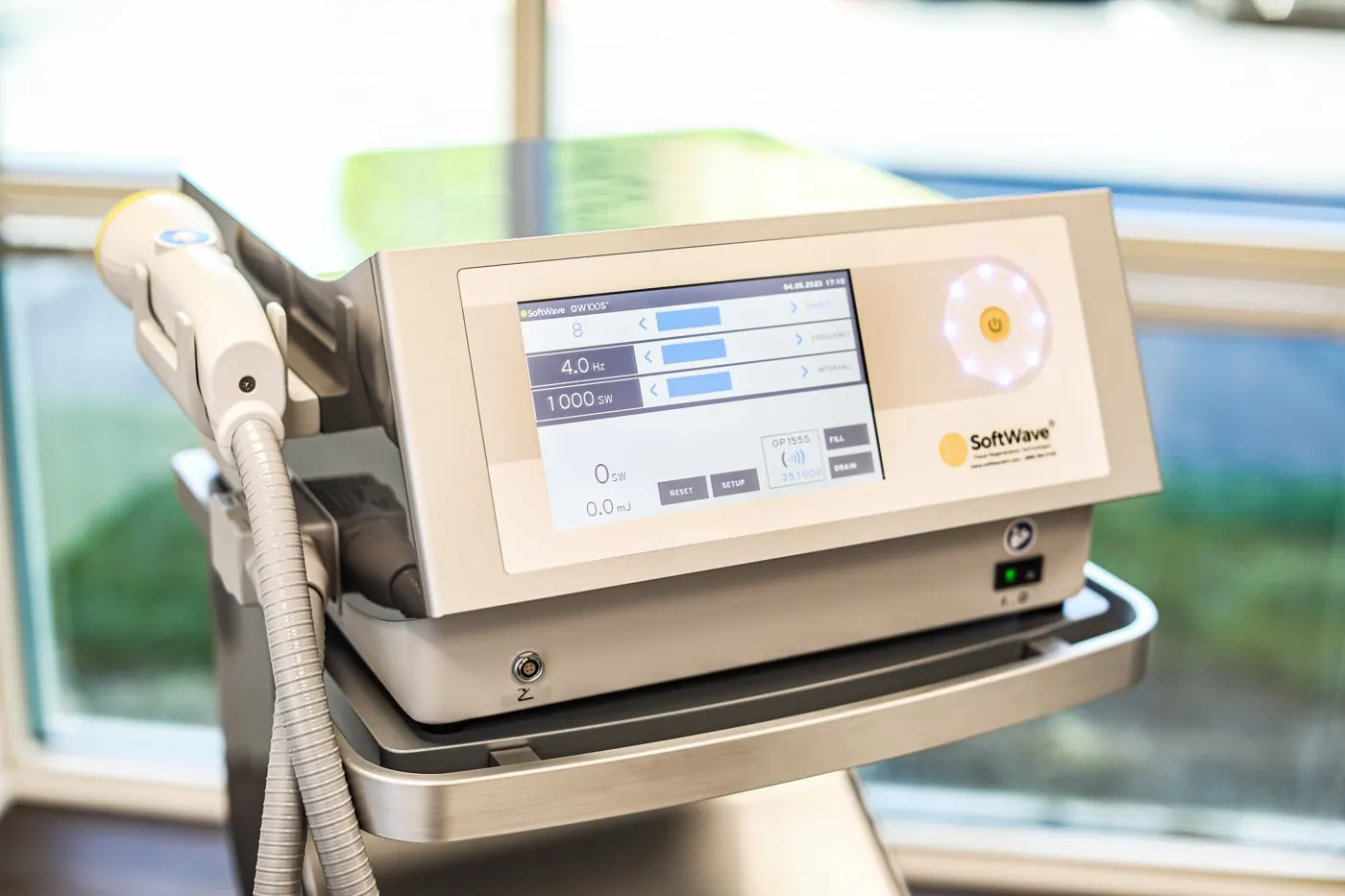
Most low back pain gets better with time, movement and the right care. But some of it hangs around for months: a sore spot that flares every time you sit too long, lift something, or skip a few days of stretching. For back pain that’s become stubborn, SoftWave is one of the tools we use at CREW.
What SoftWave is
SoftWave is an FDA-cleared device that sends acoustic waves into injured or irritated tissue. The waves improve blood flow and help switch on the body’s own repair process. It isn’t a heat treatment, a laser or electrical stimulation. The aim is to help the tissue heal, not just to quiet the pain for an afternoon.
How it’s used for back pain
Back pain usually involves more than one thing: joints that don’t move well, muscles that have tightened to protect them, and sometimes a disc or nerve. SoftWave targets the soft-tissue side: the muscles, tendons, ligaments and connective tissue that stay irritated long after the original strain.
We use it most for:
- Chronic low back muscle pain and tightness
- Sacroiliac (SI) joint pain at the base of the spine
- Pain around the hips and glutes that feeds into the low back
- Old strains that never fully settled
Why we combine it with other care
SoftWave works best as part of a plan, not on its own:
- Adjustments restore motion to joints that are stuck.
- Spinal decompression takes pressure off irritated discs and nerves.
- SoftWave helps the soft tissue heal.
- Exercises you do at home build strength so it holds.
Your doctor decides what mix fits after your exam. Not everyone with back pain needs SoftWave.
What a session is like
- Ten to fifteen minutes. Gel goes on and the applicator moves over the area.
- A firm tapping feeling. Many people describe it like a rubber band snapping lightly on the skin. We adjust the intensity to what you can tolerate.
- No downtime. You can drive home and get on with your day. We suggest skipping very heavy training for a day or two afterward.
- Usually six to eight sessions. Many people notice a difference in the first one or two, though results vary.
Who it’s for
SoftWave may be a good fit if:
- Your back pain has lasted more than a few weeks
- Rest, stretching or massage helped only for a while
- You’d like to try a non-surgical, drug-free option
- You’re active and want to keep moving while you heal
It may not be the right first step if your pain is new and sharp, or if it comes with leg weakness or numbness. Those need a full exam first.
Common questions
Does SoftWave hurt?
You’ll feel firm tapping, and it can be uncomfortable over the sorest spots. We turn it down if needed, and it usually eases as the area heals.
Are there side effects?
Usually none. Some people have mild redness or soreness for a day or two.
Do I need to be a chiropractic patient?
No. SoftWave can be booked on its own, starting with a short discovery visit to check it’s right for you.
Is SoftWave the same as Sofwave?
No. Sofwave is a cosmetic skin treatment. SoftWave, with a T, is the acoustic wave therapy we use for pain and injuries.
Find out what’s going on.
Your first visit includes a full exam, your scans, and a doctor who walks you through what they show and what to do next.
General information from the doctors at CREW Chiropractic, not medical advice for your situation. If something here sounds like you, book a visit or talk with your physician. For a medical emergency, call 911. How we write and review these articles.