Chiropractor-approved products for work, home and recovery
Stiff from sitting all day?
Book a first visit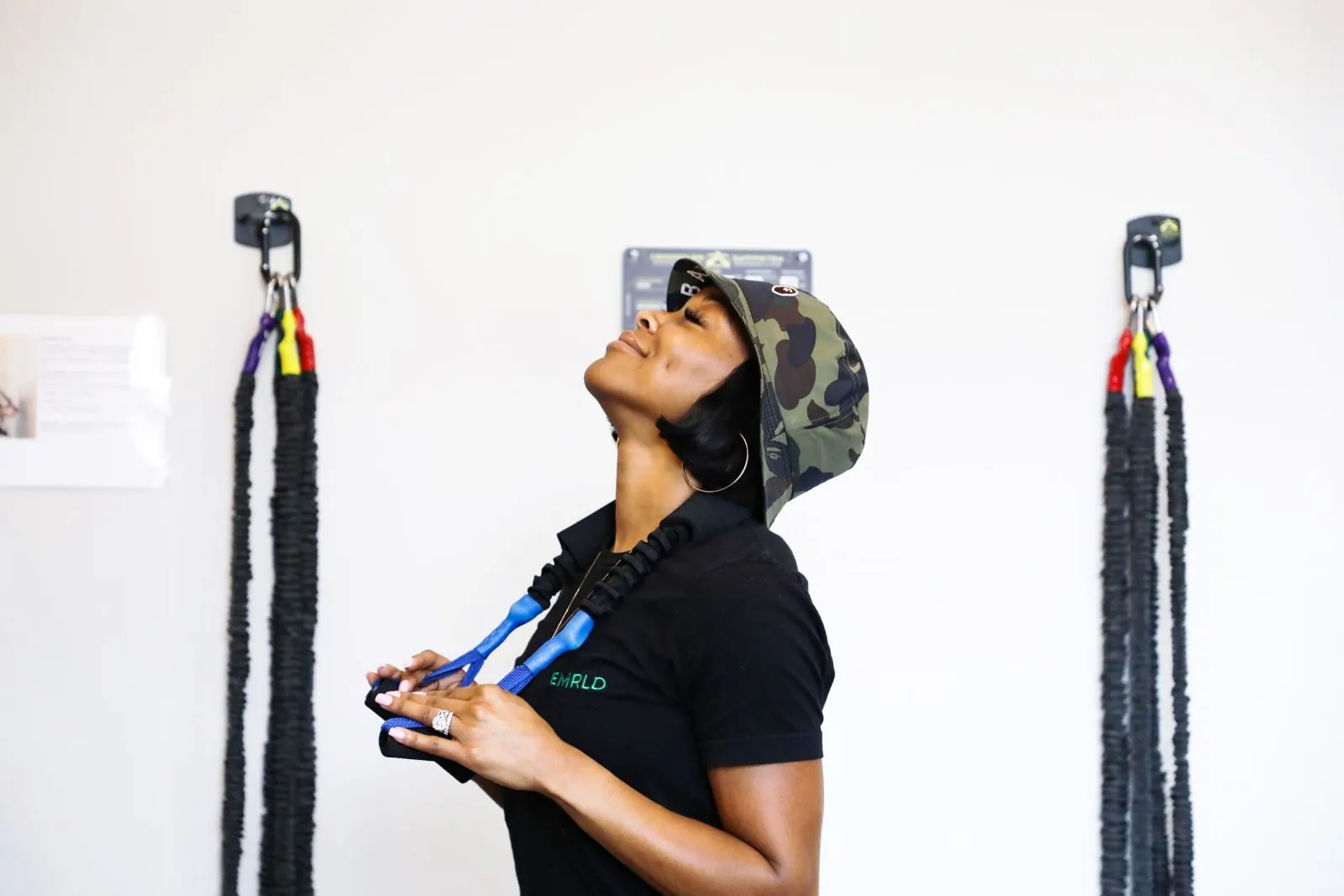
Small changes to how you sit, move and recover add up. Our doctors put together the short list of tools we actually use, at the office and at home. None of them are a substitute for care, and none are expensive. They just make good habits easier.
For your desk
A sit-to-stand desk
If you work from home, the couch or kitchen table is costing your neck and back. A desk that switches between sitting and standing lets you change position through the day, which matters more than finding one “perfect” posture. Aim to switch every 30 to 60 minutes.
A ball chair, used in short stretches
You may have noticed the ball chairs behind our front desk. They make you move: you can’t slump the same way, and your core stays switched on. Use one for part of the day, not all of it, and keep a regular supportive chair for long stretches.
Your screen at eye level
Not a product so much as a fix. Raise your monitor or laptop so the top of the screen is at eye level. A stack of books works. If you use a laptop all day, add a separate keyboard and mouse.
For mobility
Resistance bands
Bands are one of the most useful tools you can own: shoulders, posture, rotator cuff, glutes. Light band work for the upper back helps balance the hours spent rounded over a keyboard. Ask us at your next visit and we’ll show you two or three moves that suit you.
A foam roller
Rolling helps loosen tight muscles and ease stiffness before or after a workout. Roll slowly, avoid rolling directly on your lower spine, and stop on anything sharp. If you’re not sure how to use one, ask before your appointment; we have them in the office.
A lacrosse ball
Smaller and firmer than a roller, a lacrosse ball gets into spots a roller can’t: the upper back, between the shoulder blades, the chest, the glutes and the bottom of the foot. Keep one at your desk and one in the car.
For recovery
A massage gun
A massage gun is handy for tight calves, quads and upper back after training. Keep it moving, use a lower setting on sensitive areas, and stay off the front of the neck and directly on the spine.
A big water bottle
Most people don’t drink enough water. A large bottle that sits in front of you all day makes it easy.
From our supplement store
Our doctors also keep a short list of supplements they take themselves, like magnesium, omega-3, vitamin D3 with K2, and creatine. You’ll find them in our supplement store, organized by goal.
Check with your doctor before starting anything new, especially if you’re pregnant or nursing, take medication such as a blood thinner, or are managing a health condition. CREW earns a portion of every sale through our Fullscript store. You’re welcome to buy these products anywhere.
The small stuff adds up
None of these tools fixes a problem on its own. They make it easier to move more, sit better and recover well between visits, and that’s where long-term change comes from.
Common questions
Which one should I start with?
If you sit all day, raise your screen and get up every 30 to 60 minutes. That’s free and makes the biggest difference.
Can these replace care?
No. If something hurts for more than a couple of weeks, or keeps coming back, it’s worth finding out why.
Find out what’s going on.
Your first visit includes a full exam, your scans, and a doctor who walks you through what they show and what to do next.
General information from the doctors at CREW Chiropractic, not medical advice for your situation. If something here sounds like you, book a visit or talk with your physician. For a medical emergency, call 911. How we write and review these articles.